18th March, 2026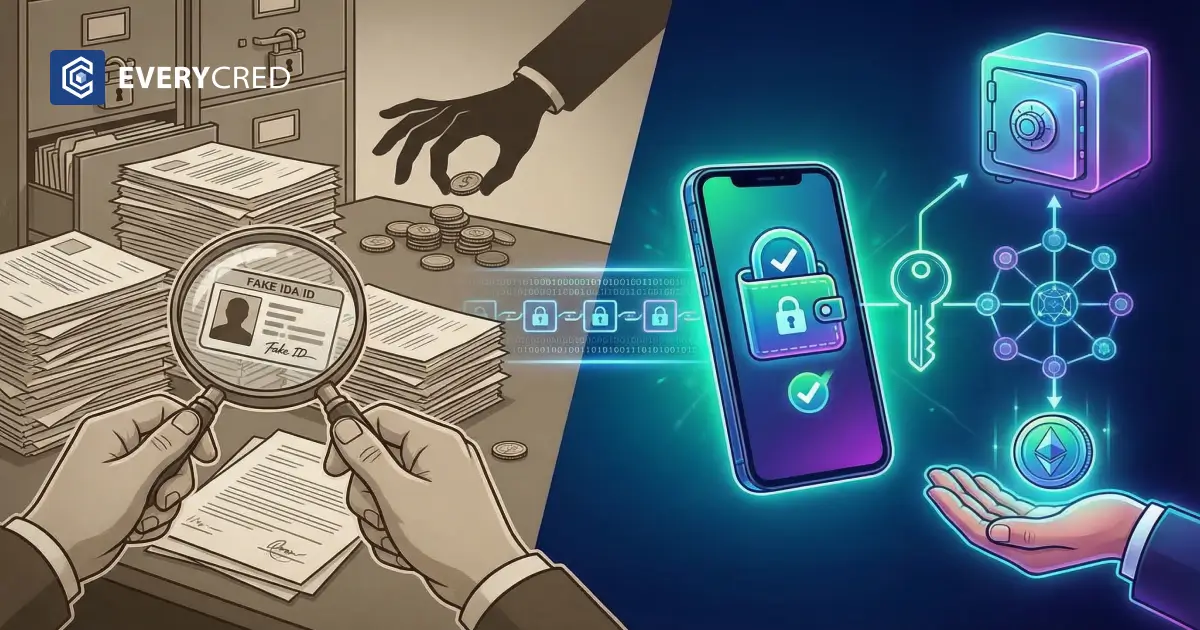
- Why Do Governments Lose Billions to Benefit Fraud?
- How Did Centralized Digital ID Change Welfare Distribution?
- What Are Verified Credentials and How Do They Work?
- How Do Decentralized Systems Outperform Legacy Databases?
- How Does Digital Identity Verification Ensure Program Integrity?
- Can Verifiable Credentials Protect Citizen Privacy?
- How Can Agencies Deploy Digital ID Solutions?
- Final Considerations for Administrators


Governments distribute financial aid, healthcare, and food assistance to citizens. Benefit fraud occurs when ineligible individuals claim these resources. Administrators need accurate methods to confirm applicant eligibility. Verified credentials provide a secure method to confirm citizen data. Agencies use digital identity verification to prevent unauthorized access to public funds. This process ensures program integrity and distributes resources accurately to the intended populations.
Why Do Governments Lose Billions to Benefit Fraud?
The United States federal government reports massive financial losses annually across its welfare programs. The US Government Accountability Office estimates annual losses between $233 billion and $521 billion due to fraud and improper payments. Several systemic factors contribute to this persistent financial leakage:
- Manual Reviews: Human error occurs when caseworkers review physical paper documents for eligibility verification.
- Data Silos: State and federal government databases operate independently and lack direct data-sharing capabilities.
- Document Forgery: Bad actors create fake paper documents, such as utility bills and pay stubs, to bypass simple checks.
- Identity Theft: Criminals use stolen personal data to create fake applicant profiles and intercept funds.
- Processing Delays: Administrators struggle to authenticate information across separate databases in a timely manner.
Agencies require verifiable credentials to solve these administrative failures.
How Did Centralized Digital ID Change Welfare Distribution?
India implemented a national digital ID system called Aadhaar to manage welfare distribution on a massive scale. The system links citizen biometric data to a unique identification number. The Government of India reported that this direct benefit transfer system removed millions of duplicate or fake beneficiary accounts from their subsidy programs.
- Ghost Beneficiary Removal: The system identified and cancelled fake accounts attached to non-existent individuals.
- Direct Transfers: The government sends funds directly into verified bank accounts, bypassing local intermediaries.
- Transaction Scale: The digital ID framework processes millions of authentication requests daily.
While centralized databases function efficiently at scale, they create specific security vulnerabilities. A single breach of a centralized database exposes millions of citizen records. Governments require systems that offer robust security without centralizing data storage. Verified credentials operate on decentralized networks to eliminate this single point of failure.
What Are Verified Credentials and How Do They Work?
Verified credentials are tamper-proof digital records. A trusted authority, such as a state welfare agency or a federal department, issues these records directly to a citizen’s digital wallet. You can understand the underlying technology by examining how digital credentials function in modern administrative systems.
- Issuance: The government verifies an individual’s status (e.g., income level, residency) and issues a digital document.
- Storage: The citizen holds the document securely in an encrypted digital wallet on their mobile device.
- Verification: The citizen presents the document to a different agency to claim a benefit.
- Authentication: The receiving system cryptographically proves the document’s authenticity instantly.
Verifiable credentials use cryptography to ensure the data remains completely unchanged after issuance. Administrators instantly know if a submitted digital document is authentic.
How Do Decentralized Systems Outperform Legacy Databases?
Traditional identity systems rely on physical documents and centralized servers. Decentralized systems use digital identity verification to authenticate users locally and securely.
| Feature | Legacy Systems | Verifiable Credentials |
| Storage Location | Centralized government databases | Decentralized user digital wallets |
| Verification Speed | Days or weeks of manual review | Milliseconds via cryptographic check |
| Document Format | Paper copies or static PDF files | Cryptographic digital ID formats |
| Data Control | Retained fully by the government agency | Managed by the individual citizen |
| Fraud Risk | High (physical forgery is common) | Low (records are tamper-proof) |
How Does Digital Identity Verification Ensure Program Integrity?
Fraud prevention requires strict adherence to eligibility rules. Administrators use digital identity verification to confirm an applicant matches their claimed profile exactly. This automated process maintains high program integrity across all digital and in-person welfare channels.
- Immutability: Blockchain technology anchors the issuance record of every credential. Bad actors cannot alter this public, decentralized record.
- Instant Verification: Automated systems read the cryptographic signature on the credential. This eliminates manual processing delays and human error.
- Audit Trails: Administrators review the verification logs for compliance audits. The system records the time and outcome of every digital ID presentation.
- Revocation: Agencies can instantly revoke a credential if a citizen’s eligibility status changes. The verification system flags revoked credentials immediately.
Can Verifiable Credentials Protect Citizen Privacy?
Citizens often need to prove specific facts without revealing their entire identity. A welfare program may require proof of income below a certain threshold. Traditional methods require the citizen to submit full tax returns. Verifiable credentials use Zero-Knowledge Proofs (ZKPs) to enable selective disclosure.
- Selective Disclosure: Citizens share only the required data point (e.g., “Income is below $30,000”) instead of providing their exact salary.
- Data Minimization: Agencies collect and store less personal data on their servers. This reduces legal liability and risk during cyberattacks.
- User Consent: The citizen must actively authorize the presentation of their verified credentials using their device’s biometric security features.
How Can Agencies Deploy Digital ID Solutions?
Government agencies require scalable infrastructure to issue and manage digital credentials effectively. EveryCRED provides a comprehensive platform for organizations to deploy decentralized identity solutions. Agencies use EveryCRED to issue cryptographic digital ID documents directly to citizens. Our platform enables automated digital identity verification workflows. This reduces the administrative burden on government staff and accelerates benefit distribution.
EveryCRED integrates directly with existing government portals and legacy databases. Administrators configure specific eligibility requirements for different welfare programs within the platform. It handles the complex cryptographic generation and verification processes automatically. Government IT teams establish secure verification systems without building custom blockchain infrastructure from scratch. The system ensures that only eligible individuals holding valid verifiable credentials have access to public funds.
Organizations can schedule a demo with EveryCRED to evaluate the platform for their specific program requirements.
Final Considerations for Administrators
Benefit fraud drains public resources and delays necessary aid to eligible citizens. Governments in the United States and India demonstrate the urgent need for secure, scalable identity management. Administrators must transition from manual paper checks and centralized databases to decentralized cryptographic systems. Verified credentials provide the necessary security to eliminate document forgery and identity theft in welfare programs. Digital identity verification ensures funds reach the intended recipients efficiently. Agencies that adopt a decentralized digital ID framework achieve higher program integrity and reduce long-term operational costs.